Lorem ipsum dolor sit amet, ad dolor diceret erroribus eos, ut est nisl summo sententiae, epicuri concludaturque ius no. Id mucius civibus mea. Eros wisi intellegam quo et, an mea nonumy latine volumus. Veniam fabulas facilisi cum ne, ad vero dolorem quo, duo modus scripserit reformidans id. An soleat senserit eos, ea tation quidam posidonium eam.

Modern life has quietly changed the way human beings live.
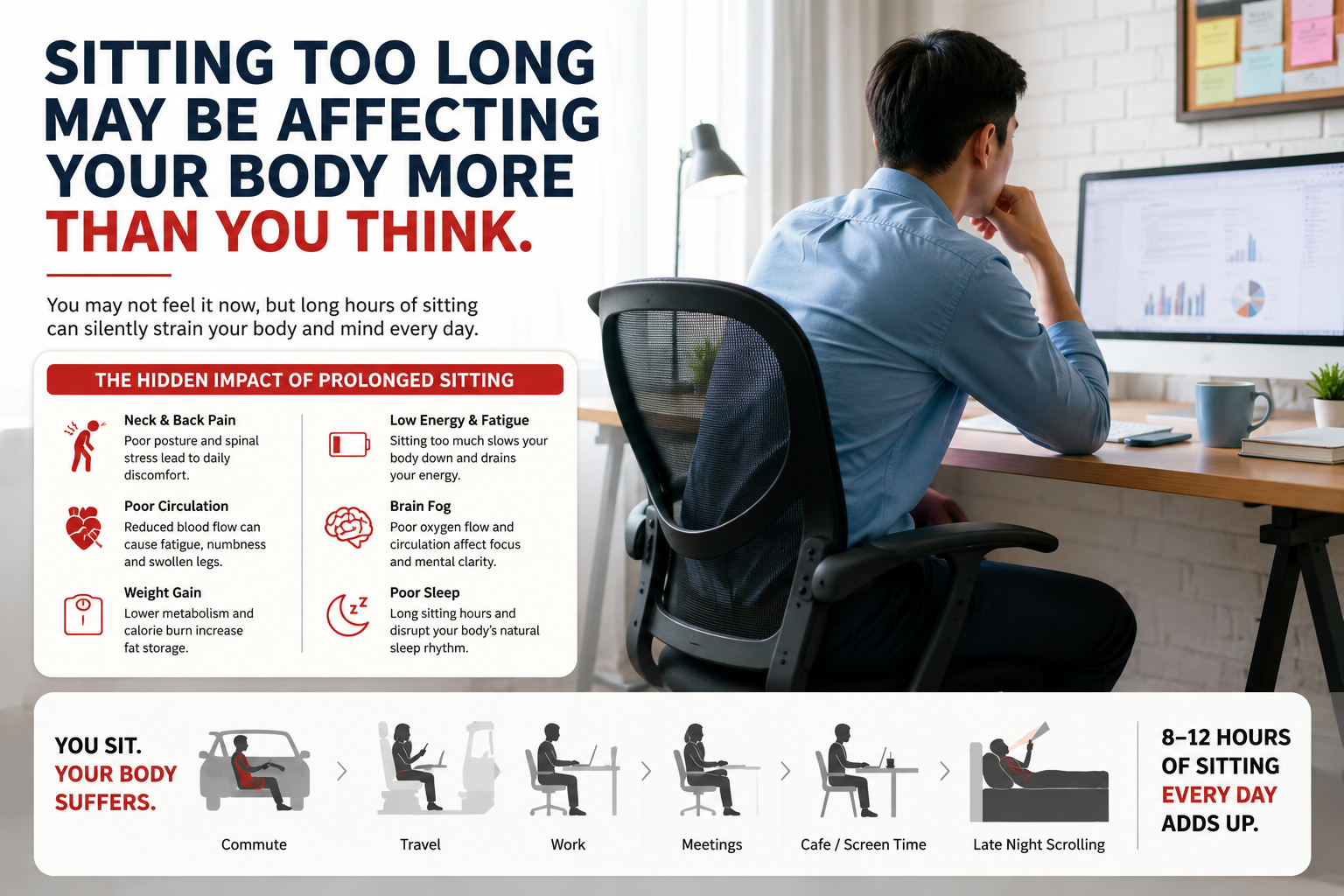
Every morning, millions of people sit in a car, on a train, or in front of a computer screen for hours. Many spend 8 to 12 hours a day sitting — in offices, meetings, cafes, at home, or scrolling on their phones late into the night.
The scary part is this:
Most people do not realize how much damage prolonged sitting may be causing inside the body.
Because the effects happen slowly.
At first, it may only feel like:
- stiffness in the neck and shoulders
- lower back discomfort
- tired legs
- poor posture
- low energy
- brain fog
- poor sleep
- weight gain
- feeling sluggish all the time
But over time, sitting too long can affect much more than just your muscles.
The Human Body Was Designed to Move
The human body was never designed to stay inactive for long periods.
Movement is deeply connected to:
- blood circulation
- lymphatic drainage
- oxygen delivery
- muscle activation
- metabolism
- nervous system regulation
- detoxification
- temperature regulation
When the body sits for too long, many of these systems begin slowing down.
Blood circulation becomes weaker.
Muscles tighten.
The hips and spine become compressed.
The body’s calorie-burning rate decreases.
Even breathing may become shallower due to poor posture.
Over time, the body slowly enters a state of stagnation.
Common Health Problems Linked to Excessive Sitting
1. Poor Blood Circulation
When you sit for long hours, especially with minimal movement, blood flow slows down in the legs and lower body.
This may cause:
- numbness
- cold feet
- swollen legs
- muscle fatigue
- tingling sensations
Poor circulation also means oxygen and nutrients may not move efficiently throughout the body.
Many people feel constantly tired because their body is literally moving less oxygen efficiently.
2. Neck, Shoulder & Back Pain
Long sitting hours place continuous stress on the spine.
Poor posture while using laptops or phones often creates:
- forward head posture
- rounded shoulders
- tight neck muscles
- compressed lower back
Over time, chronic stiffness and pain become common.
Many office workers wake up already feeling tight and uncomfortable even before the day begins.
3. Slower Metabolism & Weight Gain
Sitting reduces overall energy expenditure.
When the body stays inactive for too long:
- metabolism slows down
- fat burning decreases
- blood sugar regulation becomes poorer
This is one reason many people gain abdominal fat despite not eating excessively.
The body simply burns much less energy when movement is limited.
4. Fatigue & Brain Fog
Many people think physical tiredness only comes from hard labor.
But mental fatigue can also come from poor circulation, lack of movement, poor oxygenation, and chronic stress on the nervous system.
This is why some people:
- feel sleepy in the afternoon
- lose focus easily
- feel mentally drained after office work
- wake up feeling unrefreshed
The body may appear rested externally, but internally it is under continuous stress.
5. Increased Stress & Poor Sleep
Sitting for long hours — especially under artificial lighting and air-conditioned environments — may keep the body in a prolonged low-energy, stressed state.
Combined with screen exposure and lack of physical movement, many people struggle to fully relax at night.
The result:
- lighter sleep
- difficulty falling asleep
- frequent waking
- feeling tired even after sleeping
Why Movement and Heat Matter to the Human Body
For centuries, many cultures understood the importance of:
- sweating
- warming the body
- stimulating circulation
- relaxing muscles
- improving recovery
When the body warms up naturally, blood vessels expand and circulation improves.
Muscles relax.
The nervous system begins calming down.
This is one reason many people feel better after:
- exercise
- hot baths
- stretching
- massage
- sauna sessions
The body responds positively to warmth and circulation.
How Far Infrared (FIR) May Help
Far Infrared (FIR) is a form of invisible light energy that produces gentle radiant heat.
Unlike traditional saunas that mainly heat the surrounding air, FIR warmth penetrates more deeply into the body’s tissues and muscles.
Many people use FIR wellness sessions to support:
- muscle relaxation
- body recovery
- circulation
- stress relief
- better sleep
- overall relaxation
People who sit for long hours often report feeling:
- lighter
- less stiff
- more relaxed
- mentally calmer
- physically refreshed after FIR sessions
Why FIR Feels Different
One reason many people enjoy FIR is because the warmth feels gentler and more comfortable compared to traditional high-heat saunas.
As the body gradually warms:
- blood circulation may improve
- muscles may loosen
- sweating may increase
- the nervous system may begin calming down
This creates a deep relaxation effect that many modern office workers rarely experience in daily life.
Modern Life Is Becoming More Sedentary
Today’s lifestyle is becoming increasingly inactive:
- desk jobs
- smartphones
- online entertainment
- food delivery
- remote work
- long screen hours
The human body is moving less than ever before.
Yet the body still needs:
- movement
- circulation
- recovery
- warmth
- rest
Ignoring these needs for years may eventually affect how we feel physically, mentally, and emotionally.
Your Body Is Not Weak — It May Simply Be Overworked and Under-Recovered
Many people blame themselves for:
- low energy
- poor sleep
- stiffness
- fatigue
- lack of motivation
But sometimes the body is simply reacting to a modern lifestyle it was never designed for.
The good news is this:
The human body still has an incredible ability to recover when given the right environment and support.
Sometimes, the first step toward feeling better is simply helping the body:
- move again
- circulate again
- relax again
- sweat again
- recover again
And that may be more important today than ever before.
Menandri vis et, nam ex zril intellegam. Id possit constituto sea, solum graeco vel at
Famous author
Lorem ipsum dolor sit amet, ad dolor diceret erroribus eos, ut est nisl summo sententiae, epicuri concludaturque ius no. Id mucius civibus mea. Eros wisi intellegam quo et, an mea nonumy latine volumus. Veniam fabulas facilisi cum ne, ad vero dolorem quo, duo modus scripserit reformidans id. An soleat senserit eos, ea tation quidam posidonium eam.


Amet aeterno gubergren ne per, illum tincidunt eu cum. Nibh everti vivendo ius ne, an quas disputationi mea. Legere libris scripta vel ad, molestie menandri vis et, nam ex zril intellegam. Id possit constituto sea, solum graeco vel at.